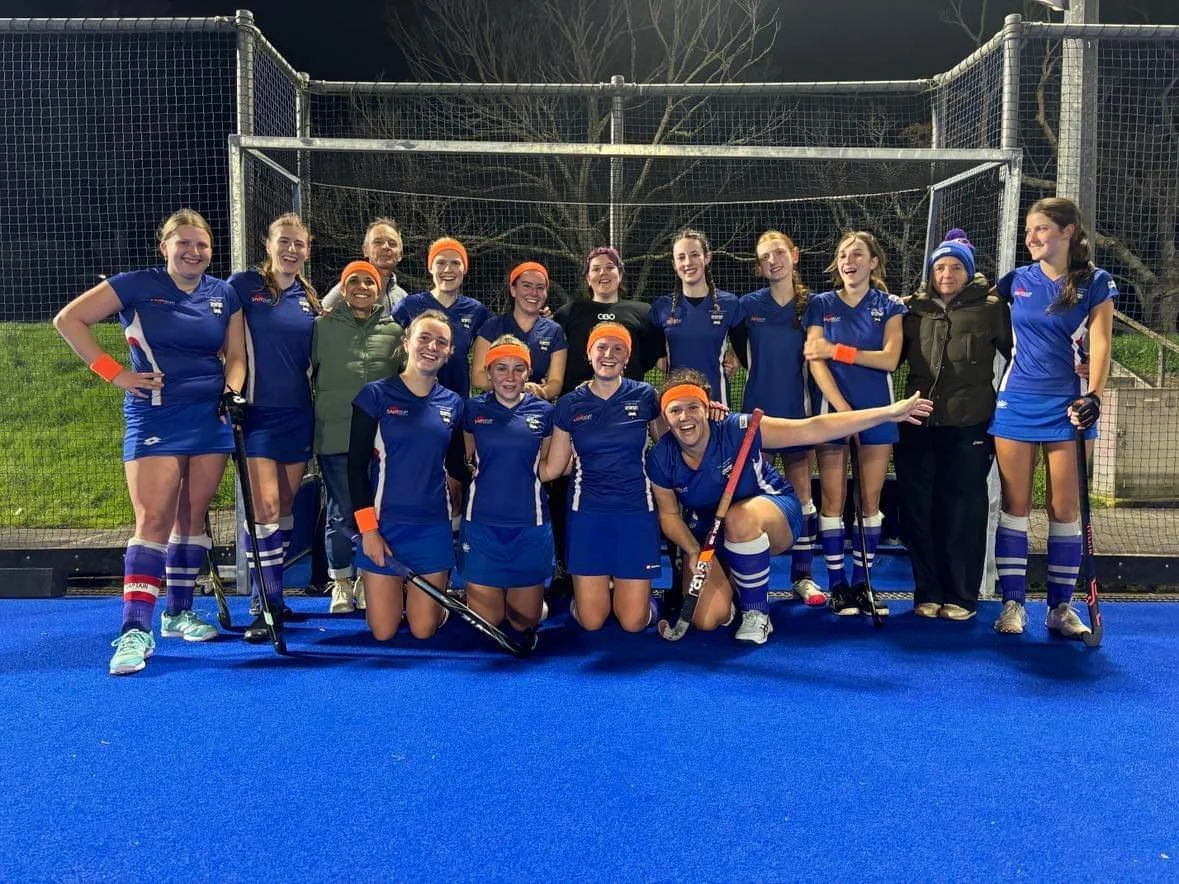
University hockey in Auckland was first recorded in 1900 when a women’s team played.

AUHC 1911 Senior Team
Standing - L. G. Robinson, J. B. Reynolds, N. R. Jacobsen, H. W. King, T. G. Jackson, H. A. Bunkall. Sitting - C. J. Burton, H. L. Richards, H. B. Speight (C), L. I. Ziman, A. M. Rowe, S. W. Collis (Secretary). Absent - E. A. Whittaker
In 1903, the Auckland University College Hockey Club was established as a men's club and became a founding member of the Auckland Hockey Association, which was formed in June of that year.
Today, it is the only surviving founding club. The men's and women’s clubs operated separately, though many stories, particularly from university tournaments, suggest close interaction between them.
The development of the women’s club and its notable events remain unclear, as records before 1990 have been lost. However, it is reasonable to assume that the women’s club was a member of the Auckland Women’s Hockey Association, which was founded in 1907. The women’s club had a unique rule stating that players could no longer participate after graduating.
This policy likely affected the club's competitive performance, as reflected in the limited number of championship wins until the rule was amended in the 1960s.
Foundations

The first 20 years of the men’s club and its influence on and off the field are reflected in the following extract about H. B. Speight:
It was in 1904 that “Mick” Speight joined the University Club which then had only 12 members. His first representative appearance was in 1907 in a match against Otago on the domain. But that was only the start. He represented Auckland in every “Rep” match till 1915 when he went on active service and was captain of the club from 1907 and Auckland from 1909. He was also captain of the first North Island team which played the South Island on Wellington’s Basin Reserve in 1914.
On return from active service in 1918 injuries prevented him from playing until 1920 but in 1919 he was appointed sole Auckland selector. When he did return to playing he was University’s goalkeeper for one season then moved to his old position of fullback and was Auckland captain from 1921-23. In the latter years he led the first NZ side on its tour to Australia which finished with the record of played 12, won 11, lost 1 scoring 59 goals with only 4 against. Besides being a player of distinction, he was an umpire to international level, treasurer of Auckland Association from 1906-24, was on the executive committee and later was vice president.
Over the past 80 years, club members have excelled in field hockey administration, coaching, and umpiring, with numerous national representatives emerging.
Notable players from the 1930s and 1940s include Max Bay, the Brouns, the Herriots, Scotty Watson, and many others. In contrast, prominent women players included the Hogben sisters and Patricia Shirtcliffe, all of whom were awarded NZU Blues.
Post-WWII, both clubs entered up to five teams in the Auckland competition, with the men's team winning the senior championships in 1946 and 1948, led by figures such as Dick Coldham and Ron Mayhill.
The women's club also shone, notably with Peggy Batty, who captained the first NZ women's team to an international tournament in England in 1953, achieving 16 wins out of 20 games. Club members B. Saunders and H. Green participated in the 1959 IFWHA tournament in Scotland.
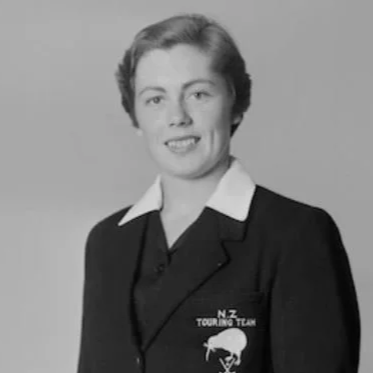
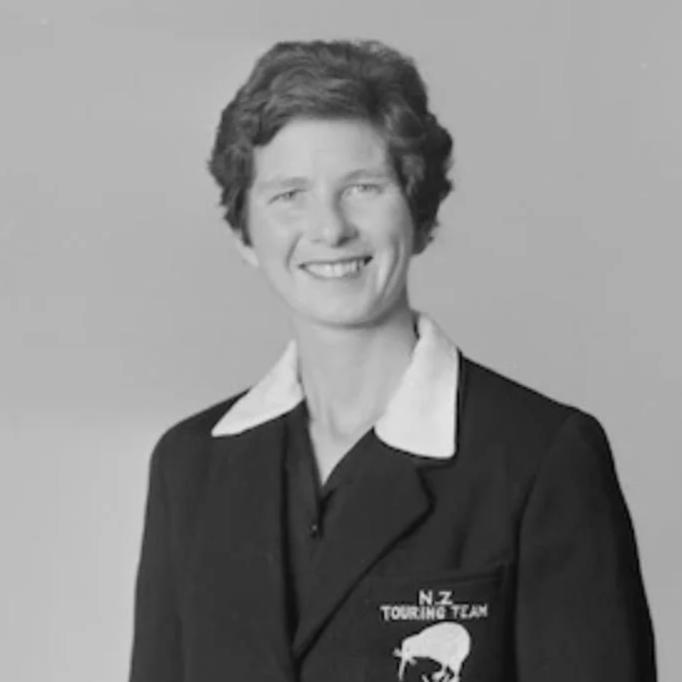
H Green, 1959
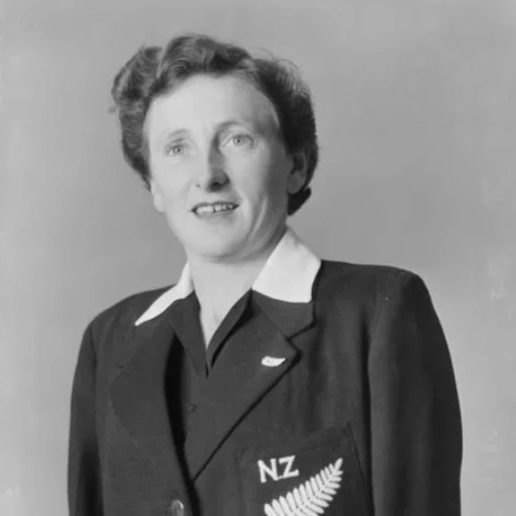
B J Saunders, 1959
Kathleen Elaine Batty, 1953
Growth
In the 1960s and early 1970s, significant changes occurred at the club, transforming its coaching and training methods from casual to structured. The arrival of coaches like Frank Wells, Ken Nicholson, and especially Ivan Armstrong, who became the national men's coach, led to regular practices and improved fitness. Under Armstrong's guidance, the club won five Premier Championships (1972-3, 1975-77) and the National Club Championship in 1977.
Tony Palmer, a pivotal figure, served as Chairman of the Auckland Association (1968-77) and managed the 1976 Olympic gold medal-winning team in Montreal. He also helped establish the University Old Boys Hockey Club in 1970, which became a strong competitor.
The women’s team flourished under coach Wayne Williams from 1981 to 1991, winning four senior titles and setting notable records, including a championship in 1989 with an impressive goal ratio.
The clubs merged in 1992, adapting to artificial surfaces, which changed game logistics. In 1995, a scholarship scheme was introduced to support young players, leading to numerous championships until its last grants in 2000.
Key former members include Olympian Jan Martin and FIH umpire Ian Faulkner, both on the NZ Hockey Federation Board, and ex-Men's Captain Dion Gosling, who earned international recognition and played until 2010.
Today…
In 2013, the Auckland University Hockey Club merged with the St. Luke’s-Albertians-Mangere Hockey Club (SLAM).
Our updated club crest features the lion from the SLAM logo and acknowledges the SLAM legacy and the members who joined our club.
Today, the club remains successful and provides an excellent environment for playing hockey. The club has both men's and women's teams playing at Premier level, with the men's premier team featuring several Regional and NZ representative players.